
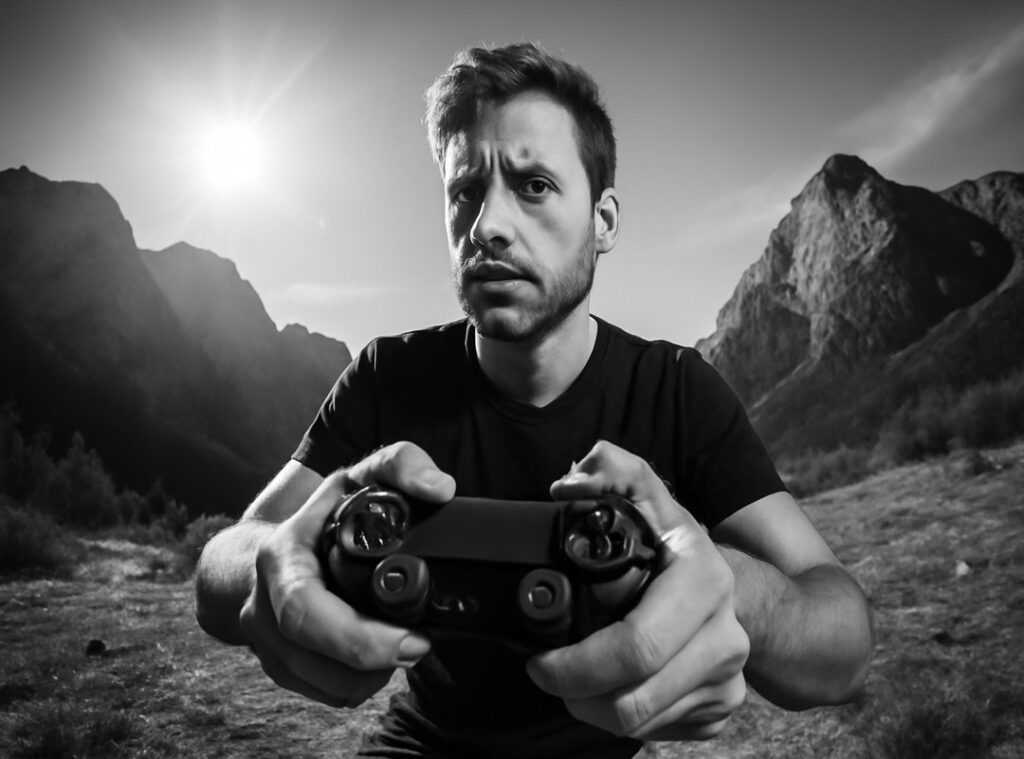
Ever lose a key in-game moment because your controls felt like a soggy noodle? Frustrating, right? Most default control schemes are set up for a generic player, not for you.
Your unique playstyle demands something better. You need an edge, and this guide is your ticket to mastering game controls. We’ve spent countless hours analyzing pro player setups and breaking down competitive gaming mechanics.
Why trust us? Because we’ve done the research so you don’t have to. You’re about to get a systematic, pro-level approach to customizing controls.
Turn that liability into a competitive advantage.
Beyond Defaults: The Mindset of a Control Grandmaster
Your game controls? They’re not just buttons. They are a direct extension of your intent.
Imagine running a marathon in rental shoes. They’ll get you there, but they won’t win you the race. That’s what default controls feel like.
Custom-fit controls? you become a grandmaster.
Ever heard of “control friction”? It’s that annoying delay or mis-input when your settings slow you down. It’s the tech equivalent of tripping over your shoelaces mid-game.
Why do players stick to bad defaults? Fear. And not knowing where to start.
It’s like staring at a messy desk and not knowing which pile to tackle first.
This process? It’s personal. Unique.
There isn’t a single “best” setup. Only the one that fits you like a glove. Your setup should eliminate the gap between thought and action.
When you think “jump”, you shouldn’t even have to consciously press the button. It should just happen.
Want to dive deeper into mastering game controls? Check out Advanced Strategies Winning Multiplayer Matches. It’s your next step in owning your game.
Remember, it’s all about finding what works for you, not what works for everyone else.
Mastering Game Controls: Universal Settings Unlocked
When diving into mastering game controls, you hit a wall. It’s called the control panel. Ever wondered why your aim feels off?
Let’s break down these settings.
Sensitivity & DPI
Sensitivity and DPI: they’re like peanut butter and jelly. On PC, DPI measures how sensitive your mouse is to movement. On consoles, it’s all about stick sensitivity.
What’s eDPI, you ask? It’s the sweet spot, combining in-game sensitivity and DPI to keep things consistent. Think of it as your personal holy grail.
It’s tricky, but once you find it, you’ll never look back.
Aim Acceleration
Aim acceleration. Sounds fast, right? Wrong.
It’s that moment when your aim unpredictably speeds up. Competitive players? They hate it.
You want your muscle memory to work its magic with predictability, not surprise you with random speed boosts. Consistency is your friend here. So, if you hope to nail those headshots, you might want to consider turning this off.
Controller Deadzones
Let’s chat deadzones. Sounds like a horror movie, but it’s not. On your controller, it’s the area where your stick’s movement doesn’t register.
Too big, and your controls feel sluggish. Too small, and you might deal with stick drift. Tune it right, and aiming feels like a dream.
Finding that perfect setting is like Goldilocks finding the just-right porridge.
Keybindings & Button Mapping
Keybindings are where you really flex. Default settings are boring. They’re like training wheels (you know, for kids).
Move your actions like jump, crouch, and melee to keys that keep your movement tight. Picture playing piano. Your fingers stay on the home keys (WASD), ready to strike whatever key you need.
I found this detailed guide handy for perfecting my setup.
To wrap this up: these settings can make or break your game. Get them right, and you’ll feel like a gaming god. Get them wrong, and you’ll keep wondering why that noob keeps beating you.
So tweak, test, and repeat. Your perfect control setup is waiting.
The Art of Adaptation: Tailoring Controls by Game Genre
Mastering game controls isn’t some one-size-fits-all affair. It’s like trying to fit a square peg into a round hole if you don’t tailor them. Each game genre demands its own set of priorities.

Seriously, think about it. Would you use the same controls in a shooter as you would in a racing sim? No way.
For FPS (First-Person Shooters)
Precision and consistency trump everything. Low vs. high sensitivity is the age-old debate, right? Some folks swear by high sensitivity for those quick 180s, but I lean towards low for accuracy.
A 1:1 response curve is non-negotiable (acceleration is the enemy). And let’s not forget binding your equipment to keys that don’t require finger gymnastics. It’s like a dance.
Everything in reach, nothing missed.
For MOBAs/RTS
Speed and efficiency are your best friends here. Smart-casting, or quick cast, can shave seconds off your reaction time. Every pro player I know uses it, so why aren’t you?
Camera control bindings should feel like an extension of your thoughts. Control groups? They’re a lifesaver when managing units.
Rapid management is key (no) time to waste in the heat of battle.
For Fighting & Action Games
Responsiveness and combo execution take center stage. Button buffering makes your moves flow like water, smooth and unbroken. Ever tried the ‘claw’ grip?
It’s a game-changer for pulling off complex sequences. Remapping light and heavy attacks is important, too. Put them where your fingers naturally rest.
You’ll thank me later.
For Racing/Simulators
Analog input fidelity is everything. Steering sensitivity and linearity must be dialed in just right. Too twitchy or too sluggish and you’re toast.
Deadzones need adjusting to suit your style, so the car does what you want, when you want. Smooth handling isn’t just about how fast you can go. It’s about precision and control.
If you want to dive deeper into unlocking secret features bonuses games, check out this guide. It’s packed with tricks most players overlook. Tailoring your controls to the game genre can be the difference between victory and defeat.
Trust me, you want every edge you can get.
The Control Lab: Your 4-Step Method to Perfect Settings
Ever felt like your game settings just didn’t click? You’re not alone. Let’s dive into this practical method to achieve that sweet spot in your own “lab.”
First up, establish a baseline. Grab a starting sensitivity. Like the one a pro uses.
Play for a solid 30 minutes to get familiar. It’s like tasting a new dish (you need to savor it before judging).
Then comes the tuning process. Perfect Sensitivity Approximation (PSA) is a fancy way of saying, “make big adjustments first, then small tweaks.” Why? Because finding a comfortable range quickly is key.
Once you’re close, the small tweaks are where the magic happens.
Next, the stress test. No setting is safe until it survives a chaotic live match. It’s like testing if your umbrella works.
Before the storm hits. You need to see if those settings hold under pressure.
Finally, muscle memory. This is key (really). Stick with your chosen settings for a week.
Your brain needs time to build those pathways. Constant changes? They’re the enemy of mastering game controls.
Ready to step up your game? Remember, this isn’t just about settings. It’s about precision, practice, and a bit of patience.
Now, let’s get experimenting!
Turn Frustration Into Power
Tired of controls holding you back? I’ve been there. But now, you’ve got the blueprint for mastering game controls.
Customize your setup, and you’ll open up the true potential of your gameplay. A personalized control scheme doesn’t just reduce frustration. It builds muscle memory and boosts confidence.
That’s what levels up your game.
Don’t just read about it. Put it to the test. Boot up your favorite game, head to the training range, and try the 4-step method tonight.
Trust me. Your future K/D will thank you. Ready to dominate?
Start experimenting now. Your win streak starts here.
 Gameplay Optimization Specialist
Dorisandiva Leen writes the kind of esports strategy breakdowns content that people actually send to each other. Not because it's flashy or controversial, but because it's the sort of thing where you read it and immediately think of three people who need to see it. Dorisandiva has a talent for identifying the questions that a lot of people have but haven't quite figured out how to articulate yet — and then answering them properly.
They covers a lot of ground: Esports Strategy Breakdowns, Honzava Competitive Mechanics, Frontline Gaming Buzz, and plenty of adjacent territory that doesn't always get treated with the same seriousness. The consistency across all of it is a certain kind of respect for the reader. Dorisandiva doesn't assume people are stupid, and they doesn't assume they know everything either. They writes for someone who is genuinely trying to figure something out — because that's usually who's actually reading. That assumption shapes everything from how they structures an explanation to how much background they includes before getting to the point.
Beyond the practical stuff, there's something in Dorisandiva's writing that reflects a real investment in the subject — not performed enthusiasm, but the kind of sustained interest that produces insight over time. They has been paying attention to esports strategy breakdowns long enough that they notices things a more casual observer would miss. That depth shows up in the work in ways that are hard to fake.
Gameplay Optimization Specialist
Dorisandiva Leen writes the kind of esports strategy breakdowns content that people actually send to each other. Not because it's flashy or controversial, but because it's the sort of thing where you read it and immediately think of three people who need to see it. Dorisandiva has a talent for identifying the questions that a lot of people have but haven't quite figured out how to articulate yet — and then answering them properly.
They covers a lot of ground: Esports Strategy Breakdowns, Honzava Competitive Mechanics, Frontline Gaming Buzz, and plenty of adjacent territory that doesn't always get treated with the same seriousness. The consistency across all of it is a certain kind of respect for the reader. Dorisandiva doesn't assume people are stupid, and they doesn't assume they know everything either. They writes for someone who is genuinely trying to figure something out — because that's usually who's actually reading. That assumption shapes everything from how they structures an explanation to how much background they includes before getting to the point.
Beyond the practical stuff, there's something in Dorisandiva's writing that reflects a real investment in the subject — not performed enthusiasm, but the kind of sustained interest that produces insight over time. They has been paying attention to esports strategy breakdowns long enough that they notices things a more casual observer would miss. That depth shows up in the work in ways that are hard to fake.