
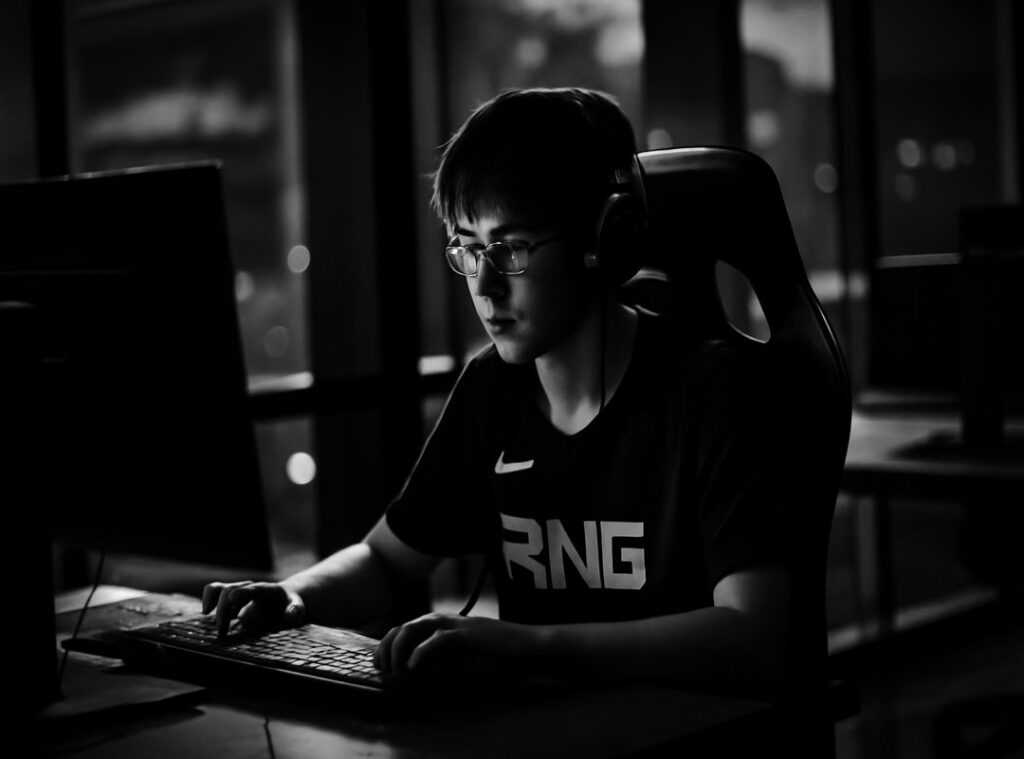
You ever lose a game because someone else got that crazy perfect loot drop? Or maybe you hit every skill shot, but a lucky key hit took you down. It’s infuriating.
Makes you wonder how you can even compete. You train, you practice, yet there’s RNG (random number generation) messing it all up. But here’s the thing: what if it’s not all bad?
In RNG competitive gaming, randomness isn’t just chaos; it’s a tool. Pro players don’t just shrug off luck; they use it. This article dives into that.
We’re talking pro-level insight, a breakdown of mechanics and psychology. You’ll learn to pivot from feeling like a victim to mastering probability. By the end, RNG won’t just be chance.
It’ll be part of your plan.
The Truth About Randomized Competitive Gaming
Let’s talk about RNG. It’s short for Random Number Generation. Sounds technical, right?
But really, it’s just a fancy way to say “chance” in games. Picture rolling a digital dice. That’s RNG at work.
It’s what makes each game feel fresh and unpredictable.
Why do games use RNG? Simple. To keep things interesting.
You might get a rare item in a loot box or face an unexpected enemy. It tests your adaptability. But not all randomness is created equal.
There’s “healthy” and “unhealthy” RNG. Healthy RNG gives you strategic choices. Think about drawing cards in a trading card game.
You plan around what you might pull next.
Unhealthy RNG? That’s when it messes with your skill. Imagine your weapon randomly jamming at a key moment.
Infuriating, right? It’s like all your training goes down the drain.
Take battle royale games. The loot is randomly scattered, forcing quick decisions. That’s healthy.
But when bullets veer off unpredictably in shooters? That’s just annoying.
If you’re serious about precision timing key game mastery, understanding RNG is key. It shapes how we play and, honestly, how we feel about a game. After all, who wants a game where luck overshadows skill?
The Psychology of Randomness: Why RNG Makes You Tilt
We’ve all been there. You’re deep into a game, making all the right moves, and then (bam!) An unexpected twist of RNG (Random Number Generator) flips the table. It feels downright unfair, doesn’t it?
It’s like the universe just wants to mess with your head. But why does it sting so much?
Here’s the deal. Losing to luck feels invalidating. You might be wondering why you remember these unlucky moments more than the times you got lucky.
It’s called negativity bias. Our brains are wired to cling to negatives. We’re not just talking about gaming, either.
It happens in life, too. Ever notice how one bad comment can ruin your day, while compliments fade away like whispers? Same concept.
RNG attacks our sense of control. For competitive players, control is everything. It’s what separates a pro from a casual.
When randomness shakes that control, you tilt. And when you tilt, decision-making goes out the window. Suddenly, you’re not thinking about plan.
You’re reacting emotionally. It’s a vicious cycle. The more you tilt, the worse you play.
So, how do you break free? Focus on the quality of your decisions, not just the outcome. Think about it like poker.
A player can make the perfect call and still lose to a lucky river card. Does that make their play wrong? No.
It’s about the mindset. This shift is the first step towards professionalism in RNG competitive gaming.
For more takeaways, check out 724229 the impact of rng on competitive gaming. It dives deeper into how randomness affects your game and psyche. Remember, you’re not alone in this.
Mastering your mind is just as important as mastering the game. Focus on what you can control and let the rest roll off your back.
From Chaos to Control: Strategies to Beat Randomness
Let’s face it, RNG competitive gaming can feel like taming a wild beast. But you can flip the odds. Here’s how.
Plan 1: Play the Odds. Don’t just wing it. Think of probability like your game guide. Remember playing a Battle Royale? Instead of diving in blind, consider where the likely circle will close. Head to high-tier loot zones. This isn’t just luck; it’s smart planning. The more you know about where the action happens, the better your chances get. This is the difference between getting caught in the open or having a solid position for the endgame.
Plan 2: Build Consistency. Don’t rely on that one epic moment to carry you. Build habits that deliver solid results. In an RTS, perfecting a strong build order can save you. It covers multiple scenarios. You can’t control every die roll, but you can make sure you’re ready for whatever comes up. Consistency is your friend. It shrinks the chaos down to a more manageable size.
Plan 3: Information Gathering. Knowledge is power. Sounds cliché, but it’s true. The more you know, the less random the game feels. In a card game, track what’s been played. This narrows down your opponent’s hand. Suddenly, it’s not so much about luck as it is about deduction. You’ve turned a guessing game into a strategic standoff.
Plan 4: Risk Management. Ever ask, “What’s the worst that could happen?” If not, start now. It’s about preparing for the worst, not just praying for the best. You need to weigh risk and reward constantly. If you can survive the worst-case scenario, you’re set. This shifts the focus from hoping for good luck to being ready for bad luck.
Incorporating these strategies isn’t just about the win. It’s about taking control. Instead of letting randomness dictate the pace, you dictate terms.
Want more takeaways into game mechanics? Check out this Deep Dive Competitive Game Balance Mechanics. It’s a game-changer for understanding the nitty-gritty of competitive play.
Ready to turn chaos into order? Sure, you might not control every outcome, but with these strategies, you’re not just rolling the dice. You’re playing the game on your terms.
And isn’t that what competitive gaming is all about?
RNG Mastery: Pros vs. Chaos
Ever wonder how the pros handle the chaos of RNG in competitive gaming? It’s all about plan and control. Take Teamfight Tactics, for instance.
Here, professionals juggle economy and probability like seasoned economists. They understand the rolling odds of the unit shop, turning what seems random into calculated moves. It’s not just about luck; it’s about knowing when to roll and when to hold.
Now, let’s talk about VALORANT and CS:GO. Shooters with spray patterns that seem like they have a mind of their own. Or do they?
Pros drill relentlessly to control these patterns, mastering the art of turning randomness into skill. It’s a dance with chaos, where practice transforms unpredictability into precision.
And then there’s Hearthstone, the wild world of digital card games. Top players excel by calculating probabilities and planning several turns ahead. They consider every card draw, every possible outcome.
It’s like a game of chess with invisible pieces, where foresight and probability rule.
So, what’s the takeaway? In RNG competitive gaming, skill isn’t just about reaction time or killer instinct. It’s about understanding and mitigating randomness.
The real pros? They don’t just play the game. They bend chance to their will.
Play Smarter, Win More
Frustrated by losing to factors beyond your control? I get it. In RNG competitive gaming, true skill isn’t avoiding randomness.
It’s mastering the systems and mindset to thrive. Want to change your game? Apply a plan from this article in your next session.
Focus on decision-making, not just win/loss. Be the one who adapts and overcomes. honzava5.com has the takeaways you need. Ready to up your game?
Dive deeper now.
 Founder & Chief Visionary Officer
Drevara Dornhanna is the kind of writer who genuinely cannot publish something without checking it twice. Maybe three times. They came to expert breakdowns through years of hands-on work rather than theory, which means the things they writes about — Expert Breakdowns, Honzava Competitive Mechanics, Frontline Gaming Buzz, among other areas — are things they has actually tested, questioned, and revised opinions on more than once.
That shows in the work. Drevara's pieces tend to go a level deeper than most. Not in a way that becomes unreadable, but in a way that makes you realize you'd been missing something important. They has a habit of finding the detail that everybody else glosses over and making it the center of the story — which sounds simple, but takes a rare combination of curiosity and patience to pull off consistently. The writing never feels rushed. It feels like someone who sat with the subject long enough to actually understand it.
Outside of specific topics, what Drevara cares about most is whether the reader walks away with something useful. Not impressed. Not entertained. Useful. That's a harder bar to clear than it sounds, and they clears it more often than not — which is why readers tend to remember Drevara's articles long after they've forgotten the headline.
Founder & Chief Visionary Officer
Drevara Dornhanna is the kind of writer who genuinely cannot publish something without checking it twice. Maybe three times. They came to expert breakdowns through years of hands-on work rather than theory, which means the things they writes about — Expert Breakdowns, Honzava Competitive Mechanics, Frontline Gaming Buzz, among other areas — are things they has actually tested, questioned, and revised opinions on more than once.
That shows in the work. Drevara's pieces tend to go a level deeper than most. Not in a way that becomes unreadable, but in a way that makes you realize you'd been missing something important. They has a habit of finding the detail that everybody else glosses over and making it the center of the story — which sounds simple, but takes a rare combination of curiosity and patience to pull off consistently. The writing never feels rushed. It feels like someone who sat with the subject long enough to actually understand it.
Outside of specific topics, what Drevara cares about most is whether the reader walks away with something useful. Not impressed. Not entertained. Useful. That's a harder bar to clear than it sounds, and they clears it more often than not — which is why readers tend to remember Drevara's articles long after they've forgotten the headline.