

Every gamer knows the feeling: you’ve put in the hours, queued countless matches, and yet your rank refuses to move. Hitting a skill ceiling can be frustrating, especially when more playtime doesn’t equal better results. The truth is, grinding games on repeat often reinforces bad habits instead of sharpening performance. Real skill progression in gaming comes from structured, deliberate practice—not autopilot sessions. This guide breaks down the framework you need to turn effort into measurable growth. You’ll learn how to analyze your gameplay, pinpoint weaknesses, and apply targeted strategies that lead to consistent, tangible improvement.
Beyond the Grind: The Core Principles of Deliberate Practice
Most players think more hours equal more skill. That’s autopilot gaming—queuing up, zoning out, hoping repetition magically levels you up (like expecting to learn guitar by strumming randomly). Deliberate practice is different. It’s structured, intentional, and laser-focused on ONE weakness at a time.
Think of it like going to the gym. You wouldn’t train arms, legs, and cardio at max intensity in the same 30 minutes. In gaming, pick a single goal: “This match I will focus exclusively on crosshair placement,” or “I will not miss a single last-hit for the first 10 minutes.” That constraint forces growth.
Next comes the feedback loop. Improvement lives in the moment you notice a mistake. Miss a shot? Ask why—bad positioning, rushed timing, poor angle? Correct it immediately. Don’t wait for the scoreboard. Immediate awareness is your XP bar filling in real time.
Structure your sessions:
- 10-minute warm-up (practice range or custom lobby)
- 45-minute focused gameplay block
- 5-minute cool-down reviewing your ONE goal
This mirrors skill progression in gaming: small, repeatable upgrades stack over time. Even Rocky needed structured training (montages aside). Train with purpose, not hope. That’s how GOOD becomes GREAT.
Deconstructing Mastery: Isolate Your Micro and Macro Gameplay
At the highest levels of competition, improvement comes from separating two core pillars: Micro and Macro.
Micro refers to your mechanical execution—how well you physically control your character. Think aiming precision, movement control, ability execution, combo timing, and reaction speed. If Macro is the chess strategy, Micro is how cleanly you move each piece.
Macro, on the other hand, is your strategic awareness. It includes map awareness, objective control, economic management, team positioning, and high-level decision-making. This is the layer that determines why you take a fight—not just whether you win it.
Sharpening Your Micro (The Mechanics That Win Fights)
If you lose duels, start here. Drill aiming, crosshair placement, strafing, and cooldown management in isolation. Use practice ranges, sandbox modes, or third-party aim trainers to remove live-match pressure. (Yes, grinding bots can feel boring—but so does losing winnable fights.)
Pro tip: Track accuracy or combo success rate daily. Small mechanical gains compound quickly.
Expanding Your Macro (The Game Sense That Wins Matches)
Ever dominate lane but still lose the game? That’s a Macro gap.
Try this simple exercise: set a timer to beep every 10 seconds. Each beep forces you to check your minimap and reassess objectives, ally positions, and resource states. Over time, this builds automatic awareness.
Mastering both sides accelerates skill progression in gaming. Micro wins fights. Macro wins matches. Train them separately—and watch your overall performance level up.
Turning Experience into Expertise: How to Learn from Every Match
The Replay Goldmine
First, understand this: your memory lies. What you think happened in a match often differs wildly from reality. That’s why VOD (Video on Demand, recorded gameplay footage) review is the single most powerful improvement tool available. Playing again immediately vs reviewing first is an A vs B choice: one reinforces habits, the other rewires them. If you care about real skill progression in gaming, you review.
Focus on Your Deaths
Next, start with every death. Pause. Ask, “Why did I die?” Then trace it back further. Poor positioning? A missed ability? Lack of information? For example, maybe you blame low healing—but the replay shows you over-extended after securing a kill (we’ve all felt invincible for three seconds). Root causes matter more than surface excuses.
Analyze Key Decisions
However, don’t stop at deaths. Review pivotal team fights or objective pushes—both wins and losses. Identify the single decision that flipped momentum. Was it an early ultimate? A late rotation? Small choices swing big outcomes.
Pattern Recognition
Over time, patterns emerge. Maybe you always chase stagger kills. Maybe you panic-ult defensively. These habits stay invisible mid-match but obvious on replay. Interestingly, this mirrors principles discussed in comparing coaching methods used in professional esports: https://honzava5.com/comparing-coaching-methods-used-in-professional-esports/. Review transforms experience into expertise.
Your Digital Dojo: Tools and Drills for Accelerated Growth
If you want faster skill progression in gaming, you need more than ranked queues. First, leverage external tools. Aim trainers for FPS titles sharpen flicks and tracking in controlled environments, while analytics platforms like Mobalytics or OP.GG surface blind spots in MOBAs—low vision score, poor gold efficiency, weak early trades. The benefit? You stop guessing and start fixing what actually costs you matches.
Next, create custom drills. Private lobbies let you rehearse grenade lineups, perfect a complex build order, or grind 1v1 matchups without chaos. Repetition under controlled pressure builds confidence (and muscle memory).
Finally, shift from passive to active watching. Instead of zoning out to a pro stream, ask: Why did they rotate now? Why that item spike? By reverse-engineering decisions, you internalize high-level patterns. Over time, your practice becomes intentional, your mistakes measurable, and your climb noticeably faster consistently.
Your New Trajectory: Consistent Practice, Consistent Progress
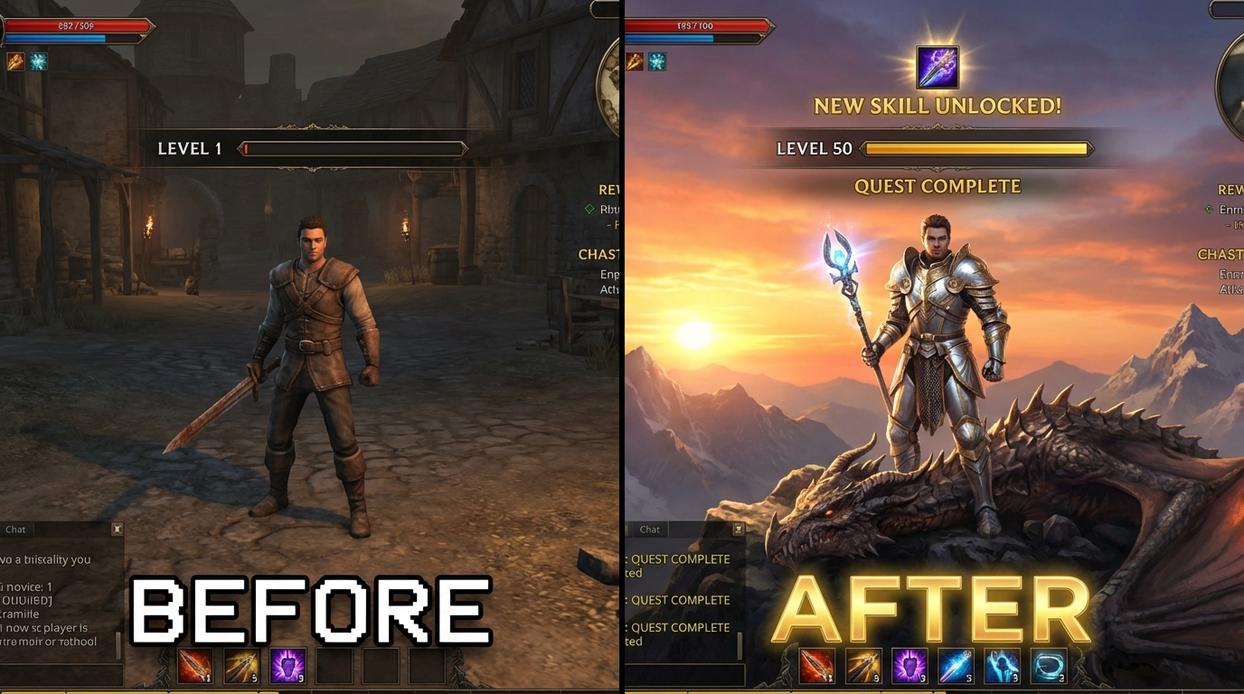
Real improvement doesn’t come from grinding endless hours—it comes from focused, intentional reps. If you’ve felt stuck, now you know the truth: skill progression in gaming is driven by the quality of your practice, not the quantity of your playtime.
Remember the formula: isolate one specific skill, practice it deliberately, then review your performance. That three-step loop turns frustration into forward momentum.
Being “hard-stuck” isn’t permanent. It’s a signal that your approach needs refinement—not that you’ve hit your limit.
Here’s your move: choose one micro or macro skill from this article and dedicate your next three gaming sessions solely to improving it. Commit. Track it. Refine it. Progress starts now.
 Gameplay Optimization Specialist
Dorisandiva Leen writes the kind of esports strategy breakdowns content that people actually send to each other. Not because it's flashy or controversial, but because it's the sort of thing where you read it and immediately think of three people who need to see it. Dorisandiva has a talent for identifying the questions that a lot of people have but haven't quite figured out how to articulate yet — and then answering them properly.
They covers a lot of ground: Esports Strategy Breakdowns, Honzava Competitive Mechanics, Frontline Gaming Buzz, and plenty of adjacent territory that doesn't always get treated with the same seriousness. The consistency across all of it is a certain kind of respect for the reader. Dorisandiva doesn't assume people are stupid, and they doesn't assume they know everything either. They writes for someone who is genuinely trying to figure something out — because that's usually who's actually reading. That assumption shapes everything from how they structures an explanation to how much background they includes before getting to the point.
Beyond the practical stuff, there's something in Dorisandiva's writing that reflects a real investment in the subject — not performed enthusiasm, but the kind of sustained interest that produces insight over time. They has been paying attention to esports strategy breakdowns long enough that they notices things a more casual observer would miss. That depth shows up in the work in ways that are hard to fake.
Gameplay Optimization Specialist
Dorisandiva Leen writes the kind of esports strategy breakdowns content that people actually send to each other. Not because it's flashy or controversial, but because it's the sort of thing where you read it and immediately think of three people who need to see it. Dorisandiva has a talent for identifying the questions that a lot of people have but haven't quite figured out how to articulate yet — and then answering them properly.
They covers a lot of ground: Esports Strategy Breakdowns, Honzava Competitive Mechanics, Frontline Gaming Buzz, and plenty of adjacent territory that doesn't always get treated with the same seriousness. The consistency across all of it is a certain kind of respect for the reader. Dorisandiva doesn't assume people are stupid, and they doesn't assume they know everything either. They writes for someone who is genuinely trying to figure something out — because that's usually who's actually reading. That assumption shapes everything from how they structures an explanation to how much background they includes before getting to the point.
Beyond the practical stuff, there's something in Dorisandiva's writing that reflects a real investment in the subject — not performed enthusiasm, but the kind of sustained interest that produces insight over time. They has been paying attention to esports strategy breakdowns long enough that they notices things a more casual observer would miss. That depth shows up in the work in ways that are hard to fake.